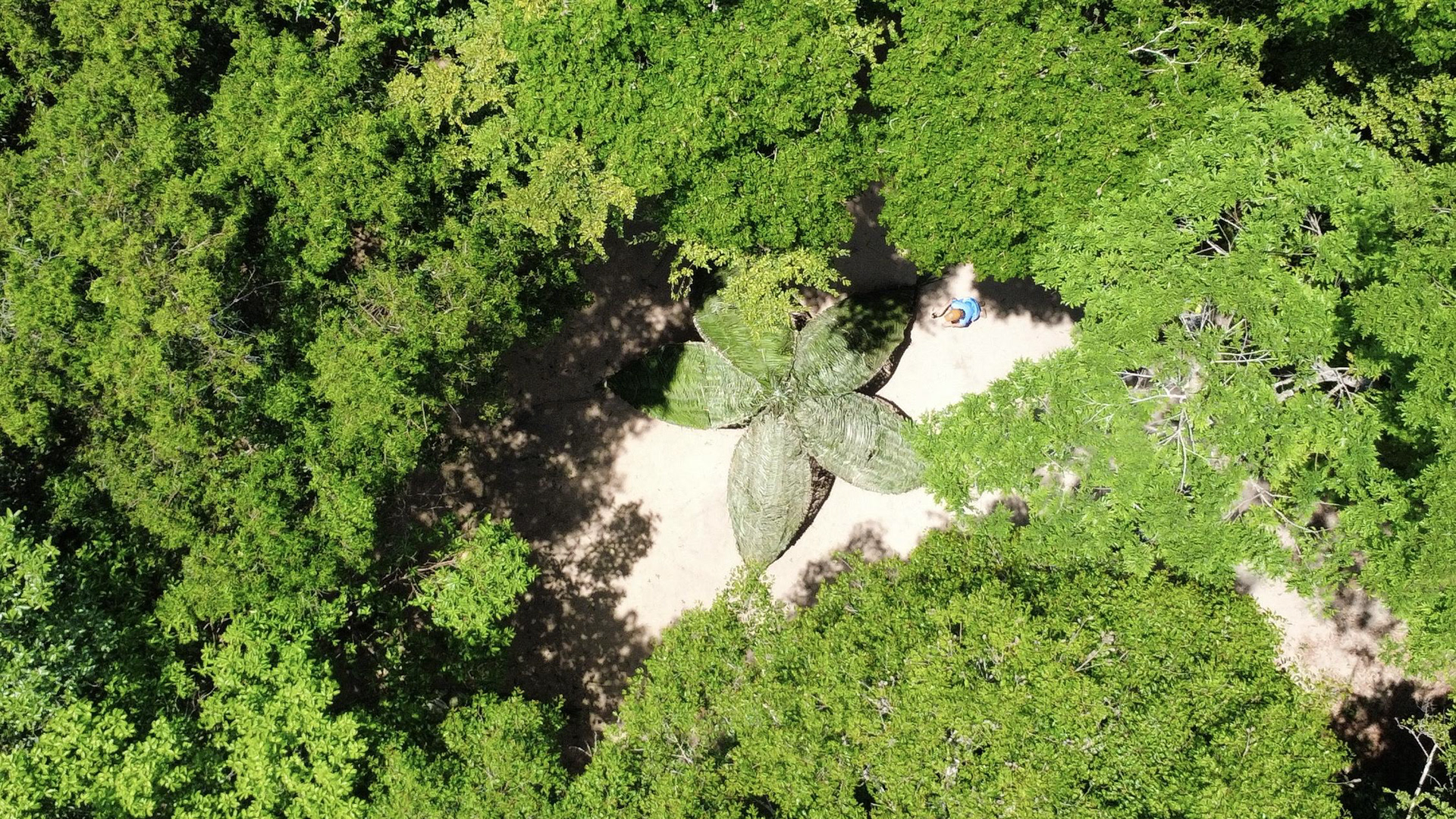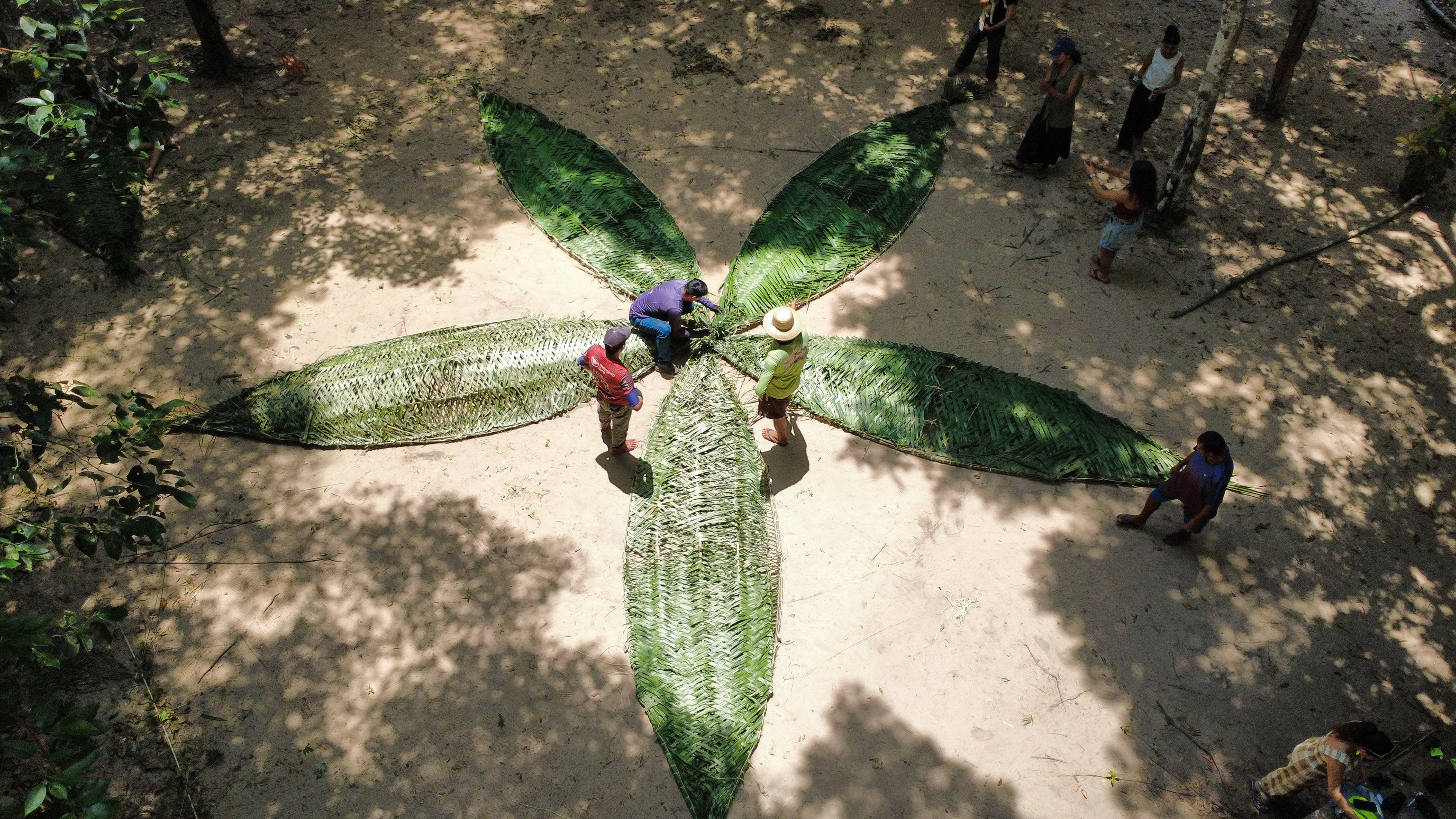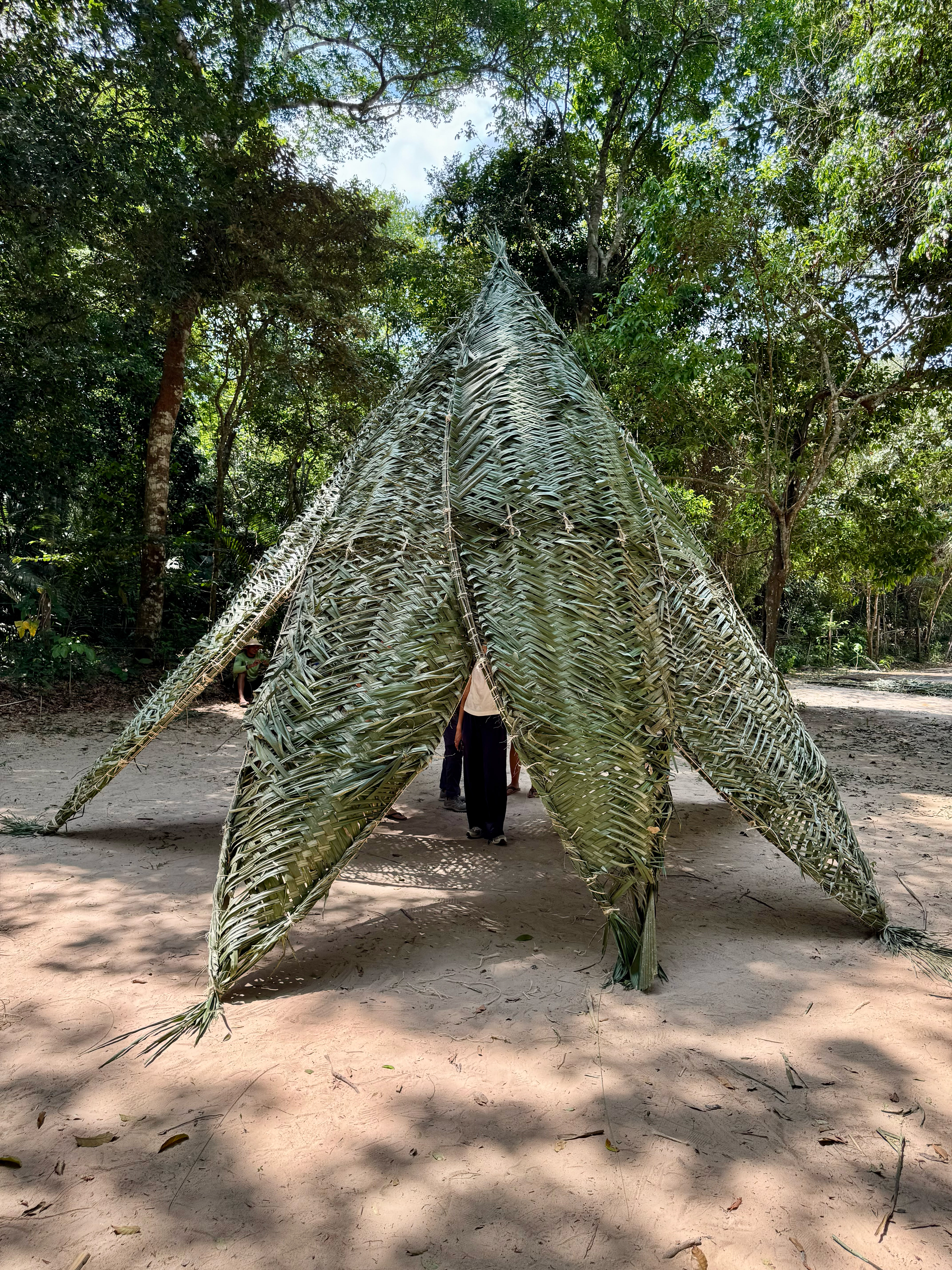
Developed in Alter do Chão, in the Brazilian Amazon, this project explored the full life cycle of a circular architectural system: from the harvesting of Curuá palm to fabrication, inhabitation, disassembly, reuse and biodegradation.
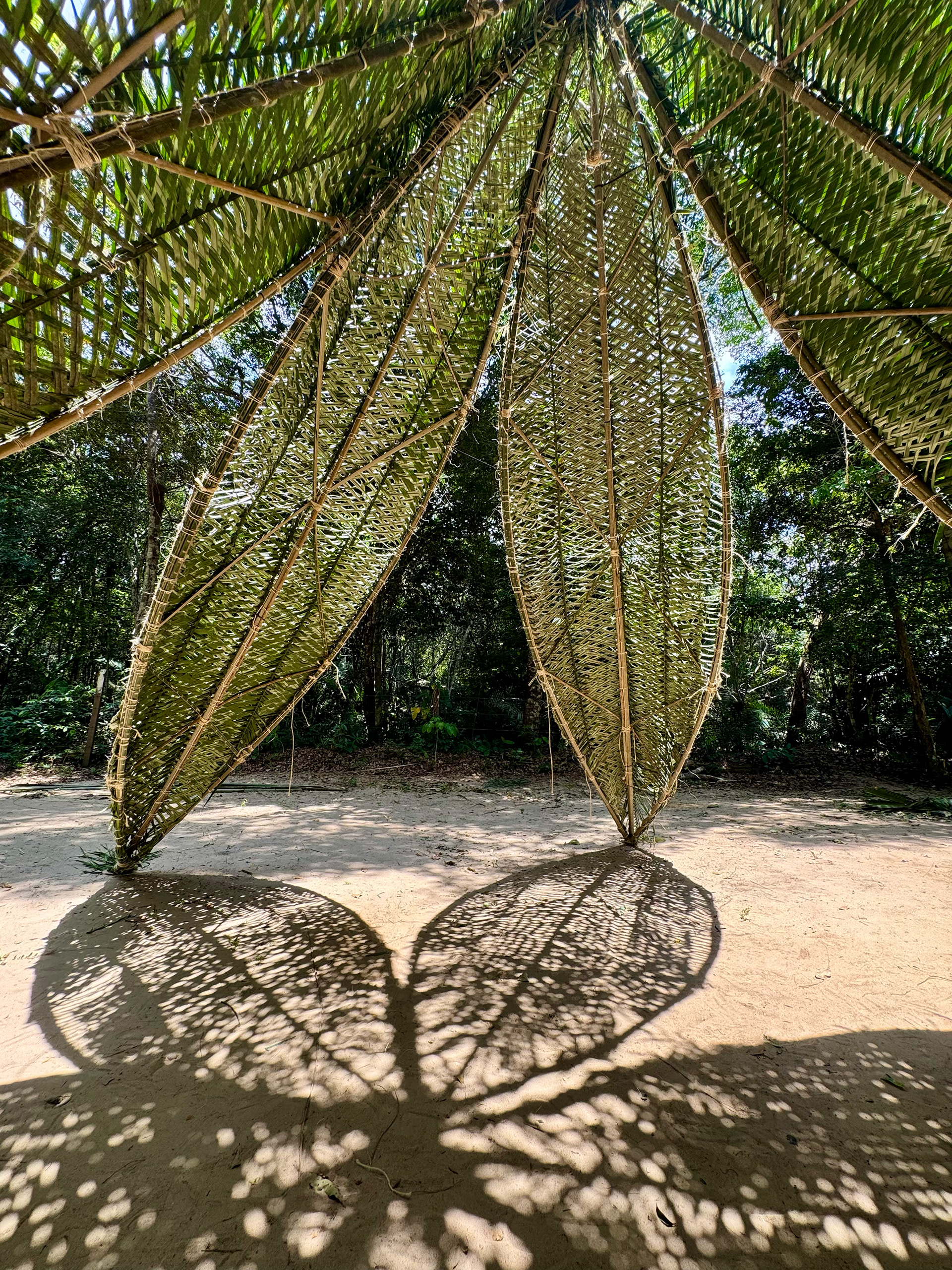
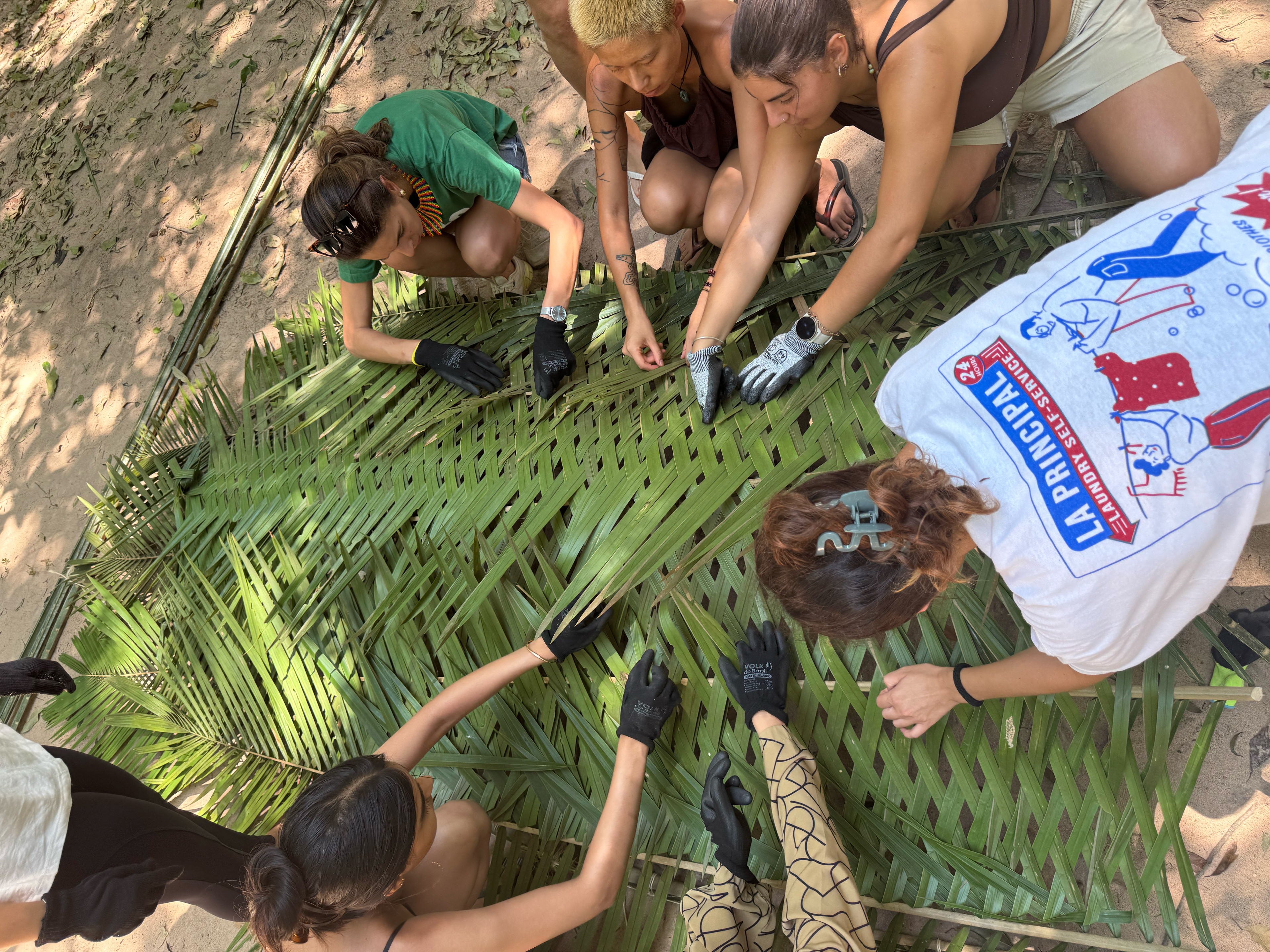
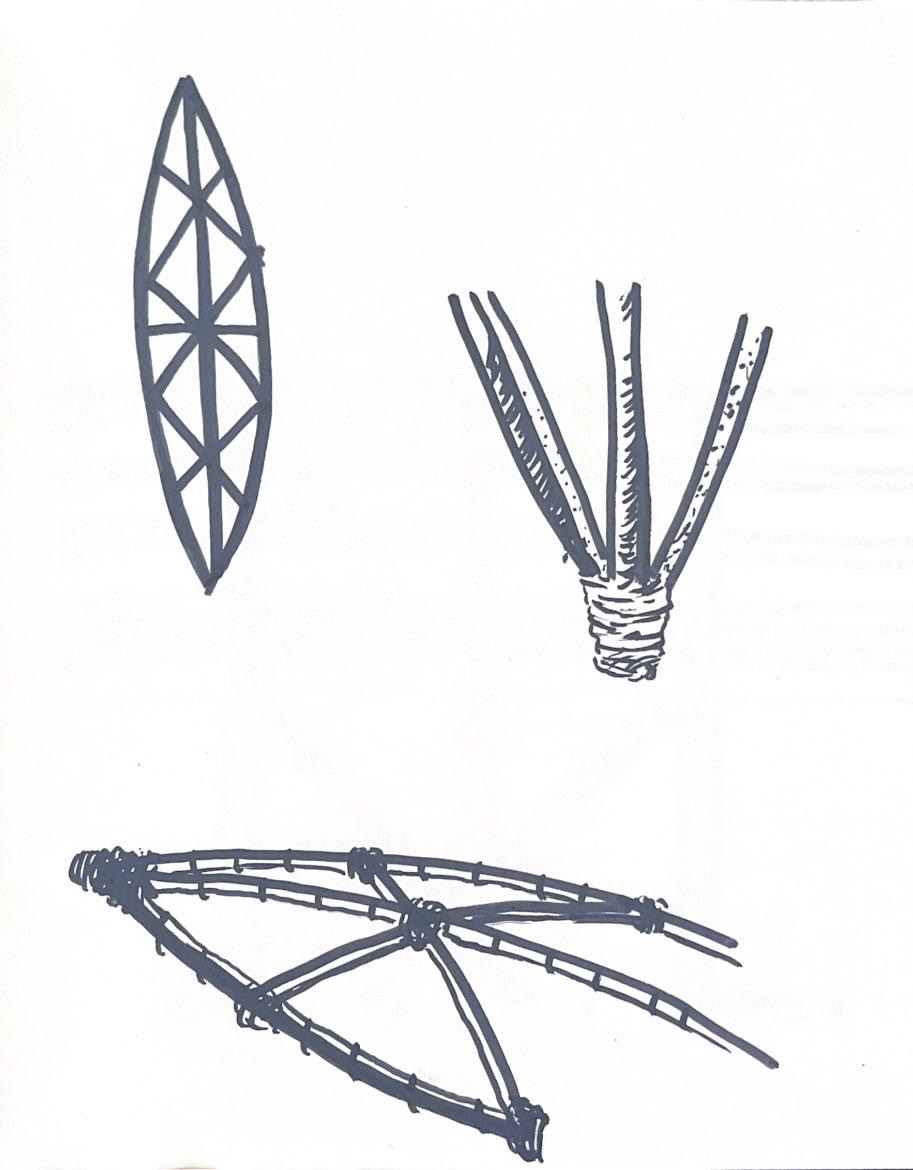
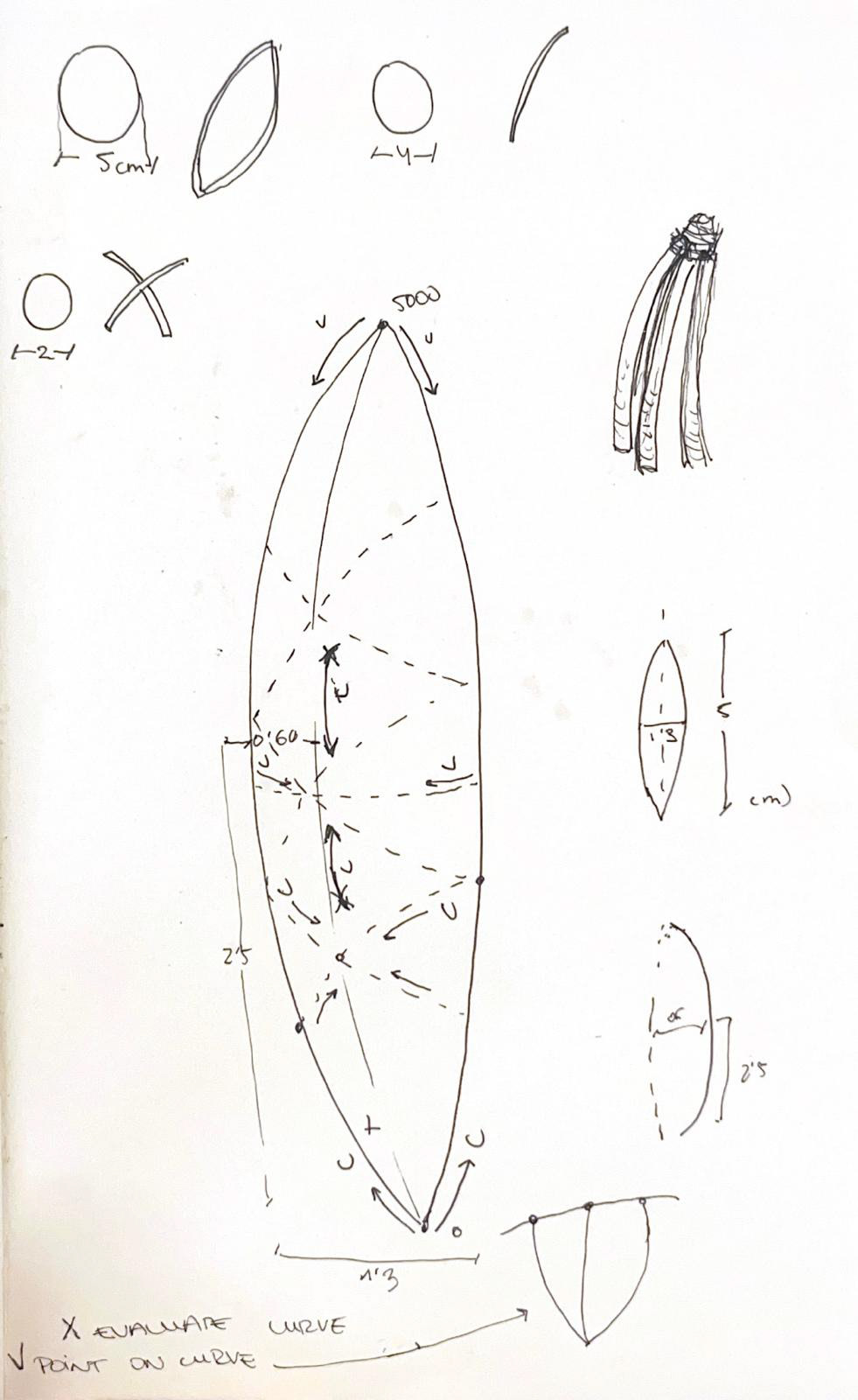
The work began with japá, a traditional Borari weaving technique in which palm stems act as a frame while leaves are woven into a diagrid surface. Through parametric modelling, this ancestral assembly logic was reinterpreted as a component-based system, adaptable in scale, geometry and context.
Assembled from Curuá stems and sisal rope, the final structure formed a lightweight, self-stabilising canopy that provided shade and ventilation without a supporting timber frame. After its first use, it was disassembled, transported and reused as a portal for the Sairé festivities at the Centro de Atendimento Turístico pier.
The project brings together Borari material knowledge, computational design and circular construction, proposing an architecture that is local, experimental and fully biodegradable.
Credits
Programme Directors: Marko Brajovic and Nacho Marti
Coordinator: Penelope Casal de Rey
Team: Claudia Anguera, Nicole Arteca, Sandra Barros de Mello, Amanda Freitas, Krisha Mittra, Diana Paparelli, Noori Sadarangani, Madge Zhou
In partnership with Escola da Floresta
Funded by the European Institute of Innovation and Technology and hosted by Climate-KIC within the framework of the EIT Higher Education Initiative.
Programme Directors: Marko Brajovic and Nacho Marti
Coordinator: Penelope Casal de Rey
Team: Claudia Anguera, Nicole Arteca, Sandra Barros de Mello, Amanda Freitas, Krisha Mittra, Diana Paparelli, Noori Sadarangani, Madge Zhou
In partnership with Escola da Floresta
Funded by the European Institute of Innovation and Technology and hosted by Climate-KIC within the framework of the EIT Higher Education Initiative.